How to Win Back Clients Who Stopped Coming to Your Hair Salon or Barbershop
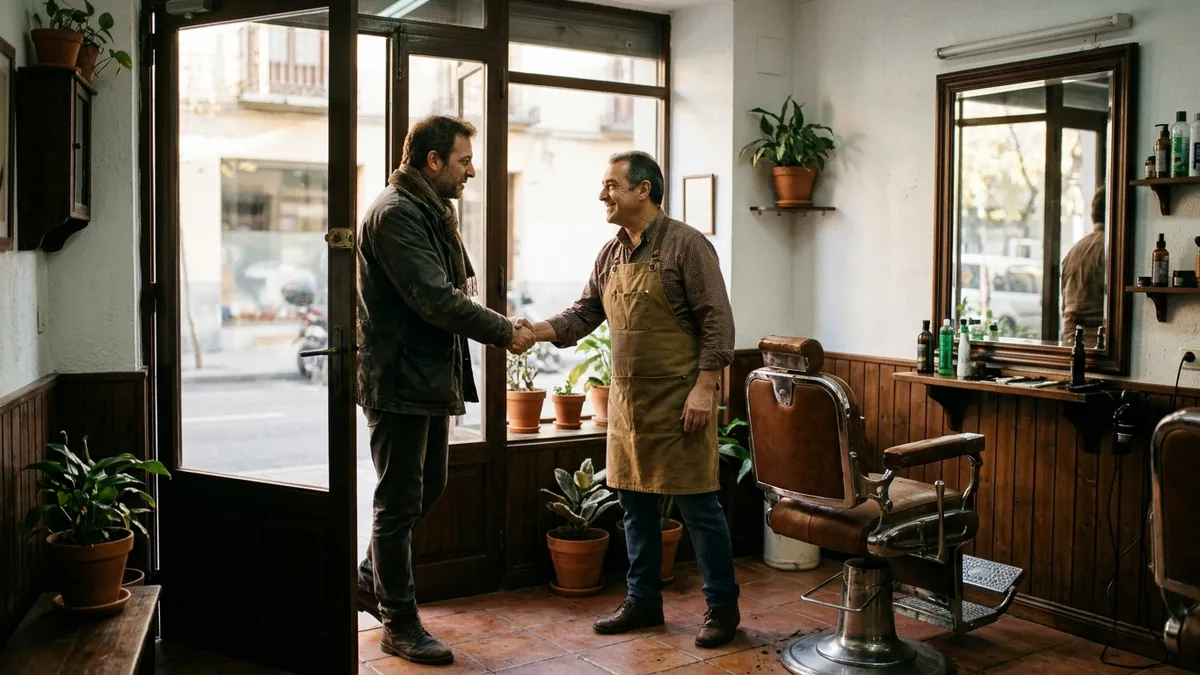
One day, while you're tidying up the appointment book, you realise you haven't seen Javier for ages. He came every four weeks, always on Friday afternoons, always the same cut. You can't remember a complaint or a sour face. At some point in the spring, he simply stopped coming. And he's not the only one: if you stop to think, five or six more names come to mind.
That's how almost every client of an appointment-based business is lost: quietly. People rarely say goodbye or tell you they didn't like something. They move house, change jobs, try the place that's closer, skip one visit and then another… and by the time you notice, they're part of your past. The good news is that some of them come back if you ask them nicely and in time.
The short answer: pull out the list of clients who haven't been in for twice their usual interval, send each of them a short, personal message with no big discount and no reproach, make it easy for them to book and note down what they reply. Repeat it once a month. Winning back a client who already knows you is usually much easier than convincing a new one, and here's how to do it step by step, with wording ready to adapt and a half-hour monthly routine.
What a client who's stopped coming is worth
Before you start writing messages, it's worth seeing what's at stake. Picture a client who came every five weeks and spent €17 a visit. That's about ten visits a year and about €177. It doesn't sound like much, but clients aren't lost one at a time, and what you lose isn't one visit, but every visit that would have followed.
| Clients you win back | Visits a year | Revenue a year |
|---|---|---|
| 3 | 31 | €530 |
| 5 | 52 | €884 |
| 10 | 104 | €1,768 |
Winning back ten clients a year, which is not at all far-fetched in a business with a few hundred clients, is worth almost €1,800 that you don't have to go out and find on the street. And there's something the table doesn't show: a client who comes back already knows how you work, there's nothing to explain, and if they come back happy, they usually stay.
Compare it with what a new client takes: they have to find you, trust a few reviews, dare to walk in and then decide whether they liked it enough to come back. The one who already knows you has skipped all those steps. You only need to remind them you're still there.
When a client is "dormant" (and when they're just running late)
Not every client who hasn't been in for a while has gone. Some come every three weeks and some three times a year, and messaging the second group every month is as useless as it is annoying. The most practical rule is simple: a client becomes a concern when they've gone twice as long as usual without coming in.
| If they usually come every… | Start to worry when it's been… |
|---|---|
| 3 weeks | 6 weeks without a visit |
| 4 weeks | 8 weeks |
| 5 weeks | 10 weeks |
| 6 weeks | 12 weeks |
| 2 months | 4 months |
| Two or three times a year | Not worth chasing: they'll be back when it's time |
Why twice? Because being a week or two late is normal: a holiday, a busy month, the flu. When the gap doubles, though, something has usually happened: they've tried somewhere else, moved, or simply lost the habit. And the more time passes, the harder it is for them to come back. A client who hasn't been in for ten weeks still remembers you; one who hasn't been in for a year already has another hairdresser.
That's why timing matters as much as the message. Writing early, at that first "twice as long" point, is what gets the best results.

How to find them without losing your mind
If you keep a paper book, you'll have to go through it by hand, month by month, noting the names that used to repeat and no longer appear. It can be done, but it takes time. If you use a booking app, you can almost certainly pull the list in a couple of minutes.
In AppMyBusiness, for example, the appointments screen of the dashboard has a button to export your clients to a CSV file, which opens in Excel, Numbers or Google Sheets. It's on every plan, including the free one. For each client it gives you the name, phone number, email if they left one, the date of their first appointment, the date of their last one and their total number of appointments. With that, the job looks like this:
- Open the file and sort by the "last visit" column, from oldest to newest.
- Keep the ones with three or more appointments. Someone who came once isn't a client you've lost; they're one you never quite won, and they deserve a different, gentler message, or none at all.
- Work out their rhythm roughly. If there are ten months between their first and last visit and they came ten times, they come about once a month. With that and the table above, you know whether they're dormant.
- Mark in another column who you're going to message and, later, what they replied.
Two details to read the list properly: the total counts every appointment recorded, including cancelled ones, so treat it as a guide rather than an exact figure. And if someone already has a future appointment booked, their "last visit" will be that date, so they won't show up as dormant, which is exactly what you want.
If you have the Pro plan with the stamp card, you have another clue: the stamp card's client list is sorted by last stamp, from most recent to oldest, so the people who haven't had a stamp for a while end up at the bottom of the list, with the stamps they had.
Why they leave (and what each reason tells you)
Not every client is lost for the same reason, and it's worth bearing that in mind before you write, because the reply you get will tell you which of these cases it is:
- They moved or changed jobs. It's the most common reason and the only one you can do nothing about. If they tell you, thank them and say goodbye warmly: sometimes they come back when they're in the area.
- It slipped their mind. A complicated month, a trip, life. Nothing went wrong; they just lost the habit. This is the group that responds best to a message, because all they needed was a nudge.
- They tried somewhere more convenient. Closer, with different hours, or where they could book at any time without calling. Sometimes they come back once they compare; sometimes they don't. If you keep hearing that it was hard to get a slot, take note.
- Something wasn't right and they didn't say. A cut that didn't turn out as expected, a long wait, an appointment that got moved. It's the most delicate case and the most valuable to know about, because it tells you something to improve.
- The price. If you raised prices recently and some people stopped coming, that may be it. A one-off discount won't fix it; what fixes it is the service being worth what it costs. If you're thinking about it, we have an article on how to raise prices without losing customers.
- The person who looked after them left. In businesses with several professionals, when someone leaves the team, their loyal clients often follow. If that's your case, a message introducing whoever will look after them now can save some of them.
The message: short, personal and no big discount
This is where everything is won or lost. The most common mistake is sending the whole list the same message that reads like an advert: "We miss you! 20% off your next visit." It sounds like a mass mailing, because it is one, and it teaches your clients that staying away gets rewarded.
Something that sounds like you works much better, written to that person, on WhatsApp and one at a time. A few rules:
- With their name and something only you know. The cut they used to have, the day they usually came, something you talked about.
- No reproach or guilt. Nothing like "don't you like us any more?". People drift away from whoever makes them feel bad.
- With a door that's easy to open. The booking link, a specific slot, or both.
- Short. Three or four lines. If they have to scroll, it's no longer a personal message.
Some examples you can adapt:
To a regular who has stopped coming: "Hi Javier, it's Marta from the barbershop. I haven't seen you for a couple of months and you crossed my mind. If you fancy coming back, I have a slot on Friday afternoon at 18:30, which used to be your day. If not, here's the link to book whenever suits you. Take care!"
To someone whose last visit didn't go quite right: "Hi Lucía. The last time you came in, I had the feeling the colour hadn't turned out the way you wanted. If that's so, I'd like to put it right. Drop in whenever you like and we'll look at it calmly, no obligation."
To someone it's been much longer with: "Hi Ana, it's Pedro from the hair salon on Calle Mayor. It's been a while since we last saw each other and I wanted to say hello. We're still here, in case you feel like dropping in one day. Here's the link to book."
If you're not great at writing this kind of message or you'd like something to start from, our free client messages tool has a template for the "client you haven't seen in a while", in a friendly or formal tone. Use it as a starting point and always add the personal detail: that's what makes it work.

What about an offer to bring them back?
A big offer for people who've stopped coming has two problems. First, it teaches that leaving pays: if word gets around, some people will wait for the discount message. Second, it's unfair on the clients who never left and pay their normal price every month.
If you want to give them an extra reason, keep it small and don't make it about price: holding their usual slot, a little extra during the service or, if you have a stamp card, reminding them how many stamps they need for the reward. What usually brings people back isn't money, but feeling remembered and finding it easy to return.
When they reply (and when they don't)
From each batch of messages, some people will reply and some won't. Both tell you something.
- "I've moved." Thank them, wish them luck and, if they were happy with you, you can naturally ask them to leave you a Google review. It takes them a minute and it helps you with new clients. You'll find more ideas in how to get more Google reviews.
- "Last time I didn't like…" Listen without getting defensive, thank them for telling you and offer to put it right. Even if they don't come back, you've just learned something other clients would never have told you.
- "Oh, you're right! Have you got a slot on Thursday?" It's the most common reply when the message is personal. Book the appointment on the spot and, when they come in, treat them as if they'd never left.
- Silence. Don't insist. One message is a nice gesture; three is chasing. Note that they didn't reply and, at most, try again in a few months with a different tone.
- "Please don't message me again." Apologise for the bother, note it down and don't do it again. Only write to people who gave you their number for their appointments, always one at a time, and respect anyone who'd rather you didn't.
Making sure they don't leave again
Winning clients back is good, but losing fewer is better. Almost everything that makes a client stay is decided while they're still coming:
- Offer the next appointment when they pay. "Shall I book you in for five weeks' time?" People who leave with an appointment booked are hardly ever lost. We go into it in more detail in the article on how to get the first clients for a new business, where the second visit takes centre stage.
- Make booking easy. A link or an app where they can ask for a slot at eleven at night, without calling. Many people don't leave because of anything you did wrong, but because booking somewhere else is more convenient.
- A reason to come back. A stamp card turns each visit into a step towards something, and nobody likes leaving a card half full.
- Reminders. A reminder the day before an appointment prevents a lot of no-shows, and a badly handled no-show is often the start of a goodbye. There are more ideas in what to do when clients don't show up.
- Ask in the moment. A sincere "how does that look?" in front of the mirror, before they get out of the chair, saves you many clients who would otherwise leave without a word.

A half-hour monthly routine
All this only works if you do it regularly. Doing it once, on a whim, doesn't achieve much. What works is turning it into a small habit, for example on the first Monday of every month:
- Ten minutes: export the list, sort it by last visit and mark the people who have gone twice their usual interval.
- Fifteen minutes: write between five and ten personal messages. No more: if you start writing forty, they'll all end up the same.
- Five minutes: note on the sheet who you wrote to and, during the week, what they replied and whether they booked.
After three months you'll have real data: how many messages you sent, how many people replied, how many came back and, above all, why the ones who left were leaving. That last column is gold, because it tells you what you need to change inside the shop.
Common mistakes when trying to win clients back
- Waiting too long. A client who hasn't been in for a year already has another hairdresser. The best time is when it's been twice their usual interval, not three times.
- The mass message. The same text to fifty people, with a discount and emojis. It shows, and it doesn't work.
- The reproach. "You haven't been in for ages, has something happened?" can sound like a complaint. Better to say you thought of them.
- Insisting. One message is a nice gesture. A second one, if they don't reply, no longer is.
- Chasing people who came once. A one-visit client isn't a lost client. If you write to all of them, you end up bothering people who never thought of coming back.
- Not noting the reason. If you don't write down why each one left, in six months you'll still be losing clients for the same reason.
What AppMyBusiness does in all this (and what it doesn't)
So you know exactly what the app can save you and what will still be down to you:
- Export your clients to CSV, with name, phone, email, first visit, last visit and total appointments. On every plan, including the free one.
- Online bookings 24 hours a day, with your link and your QR code, so anyone who wants to come back can do it in a minute. Unlimited appointments and no commission per appointment, included in the free plan.
- An email reminder the day before each appointment, if the client left their email, and appointments added by hand from the dashboard for anyone who replies "have you got a slot on Thursday?".
- With the Pro plan: a stamp card with a client list sorted by last stamp, phone alerts to clients who have them turned on, and a QR code on your screen to ask for a Google review when the appointment ends.
What it doesn't do: it doesn't spot dormant clients on its own or message them for you, and phone alerts go to everyone who has them turned on, not to a particular group. To win clients back, a personal WhatsApp message is still what works best, and luckily no app can do that better than you. What the app does is give you the list in two minutes and make booking very easy when the client wants to return.
The app is created and published for free in a few minutes. The Pro plan costs €9.90 a month VAT included, with no contract. We have pages made for hair salons, barbershops and beauty salons.
Frequently asked questions
How do I know if a client has stopped coming to my hair salon?
Compare how long it's been since their last visit with their usual gap between visits. If someone came every four weeks and hasn't appeared for eight, something has probably happened. To see it quickly, pull a list of clients with the date of their last visit (in AppMyBusiness you export it to CSV from the dashboard) and sort it from oldest to newest.
What message should I send a client I haven't seen in a while?
A short, personal one on WhatsApp, with their name and some detail only you know, without reproach and with an easy way to book, such as the link or a specific slot. For example: "Hi Javier, I haven't seen you for a couple of months and you crossed my mind. I have a slot on Friday afternoon, if you fancy it."
Should I offer a discount to win clients back?
Not a big one: it teaches that staying away gets rewarded and it's unfair on those who never left. A small gesture that isn't about price works better, such as holding their usual slot or reminding them how many stamps they need for the reward. What usually brings people back is feeling remembered.
How many times should I message a client who doesn't reply?
Once. If they don't reply, note it and, at most, try again in a few months with a different tone. If someone asks you not to message them, don't do it again. One message is a nice gesture; several in a row feel like being chased.
How often should I check the list of dormant clients?
Once a month is enough for a small business. Half an hour on the first Monday of each month is enough to pull the list, write five to ten messages and note the replies. What matters is regularity: writing in time works much better than one big batch once a year.
How we did the maths
The numbers are an example to show you the method, not data from any real business. A client who comes every five weeks makes 52 / 5 = 10.4 visits a year. At €17 a visit, that's 10.4 × 17 = €176.80 a year, about €177. For 3, 5 and 10 clients won back: 31, 52 and 104 visits a year (rounded), and €530, €884 and €1,768. The "twice as long" rule is a practical guideline, not a law: adjust it to your clientele. The client export, its columns, the order of the stamp card's client list and the price of €9.90 a month have been checked in the app as of today. We don't use outside statistics: the figure that matters is the one in your own list.