How to Get the First Clients for Your New Hair Salon or Barbershop (the First 90 Days)
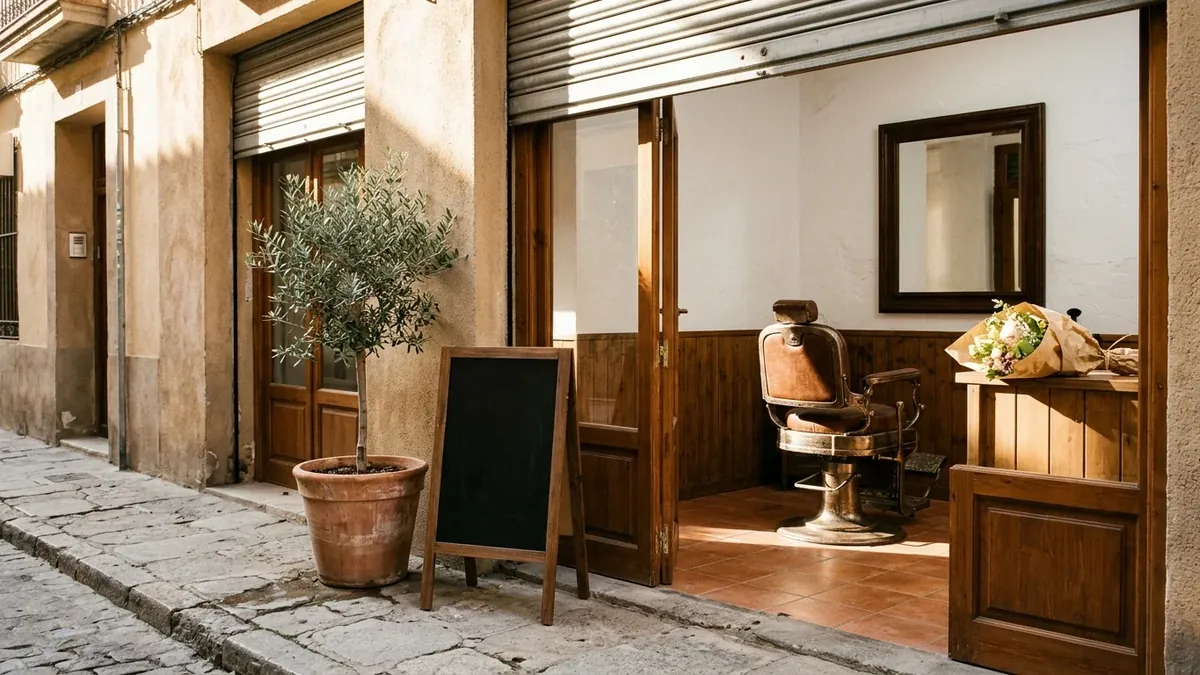
On opening day, everyone came. Your family, your friends, the neighbour from the fifth floor, the woman from the bakery. There were flowers on the counter and someone took photos. The following Tuesday, at eleven in the morning, you were alone in the shop with the radio on, watching the door. It's the part of opening a business nobody tells you about: friends come once, but clients have to be won, and it almost always takes longer than you expected.
This article is for those first weeks. It's for anyone who has just opened (or is about to open) a hair salon, a barbershop or a beauty salon and wants to fill the book without throwing money at advertising or giving their work away.
The short answer: before you open, have your Google profile, your booking link and a sign with your hours and prices ready; in the first weeks, introduce yourself to the neighbourhood in person; ask your first real clients for a review; and above all, work on the second visit, because an appointment-based business doesn't live on people who come once, but on the ones who come back. Further down you'll find the calculation of how many regular clients you need to cover costs and pay yourself a salary, what to do week by week and what to measure to know whether you're on track.
First, the maths: how many clients you really need
Before thinking about how to attract people, it's worth knowing how many people you need. Without that figure, every slow week feels like a disaster and every good week feels like you've made it. With it, you know exactly where you stand.
Picture a barbershop with these fixed monthly costs: €800 rent, €150 electricity and water, €350 between self-employed social security and the accountant, and €200 for insurance, phone and other costs. That's €1,500 in total. The average service costs €17 and uses about €2 of product, so each service leaves €15 to pay for everything else. Regular clients come back, on average, every five weeks, which works out at about 0.87 visits per person per month.
| Goal | Services a month | Per day (22 days) | Regular clients needed |
|---|---|---|---|
| Cover costs | 100 | 4.5 | 115 |
| Costs and €1,200 for you | 180 | 8.2 | 207 |
| Costs and €1,600 for you | 207 | 9.4 | 238 |
Look at the last column, because that's the one that matters. For this barbershop to pay its costs and a reasonable salary, it doesn't need thousands of clients: it needs about 200 people who come regularly. You don't have to be on television. You need those 200 people to find you, try you and, above all, come back.
And that's the catch. If five out of every ten people who try you come back, about 414 new people have to sit in your chair to build up 207 regulars. If seven out of ten come back, about 296 are enough. The difference between a first year that feels endless and a reasonable one usually isn't how many people walk in, but how many return. That's why this article spends as much time on the second visit as on the first.
Do this same calculation with your own numbers before you read on. Half an hour with a notebook tells you what your real goal is, and everything else falls into place from there.
What has to be ready before you open the door
There are things that, if they're not ready on day one, lose you clients who had already found you. They're neither expensive nor difficult, but they take time, so it's better to do them during the refit rather than on the day you raise the shutter.
- Your business's Google profile. It's the first thing almost anyone sees when they search "hair salon" or "barbershop" on their phone in your area. Create it as soon as you have the address, because Google has to verify it and that can take several days. Choose the main category carefully (hair salon, barbershop, beauty salon), add your real opening hours, your phone number and real photos of the shop, even if it still smells of paint.
- A booking link. Someone who sees your profile at eleven at night isn't going to call. If they can book in two taps, they will; if not, they'll forget. That link goes on your Google profile, your Instagram profile and your WhatsApp.
- Prices on display. In the window, in the shop and online. Many people won't walk into a new place for fear it's expensive and feeling awkward about asking. A clear price removes that barrier.
- A window that makes sense from the pavement. What it is, what hours it keeps and how to book. A QR code that leads to your app or your bookings helps anyone who passes by while you're closed.
- WhatsApp Business with an away message. If people write while your hands are busy, they get an automatic reply with the booking link. It's one line, and it saves you many clients who won't wait.

The first weeks: your neighbourhood, on foot
A neighbourhood business lives, above all, on the people nearby. Almost all your clients will live or work a few minutes' walk away, so the place to start isn't the internet, but the streets around you.
What works best is the oldest trick of all: introducing yourself. Go into the shops on your street (the greengrocer's, the pharmacy, the bar on the corner, the stationer's), say who you are and leave a few cards with your link or QR code. People who deal with the public talk to a huge number of people every day, and when one of their customers asks "do you know a good hairdresser round here?", you want them to think of you. You don't need to sell them anything. It's enough for them to put a face to the name.
Some ideas that cost next to nothing:
- Cards with something useful on the back. Your opening hours and the link or QR to book. A card with only your name on it ends up in the bin; one that lets people book ends up in their wallet.
- Nearby offices and shops. People who work next door can come at lunchtime or after work. A short visit with cards for the staff usually does more than a hundred leaflets through letterboxes.
- An arrangement with a business that doesn't compete with you. A clothes shop, a gym, a bridal shop. You recommend theirs, they recommend yours. No paperwork, just your word.
- The door open. Weather permitting, let people see inside. A new place with the door shut and frosted glass doesn't invite anyone in.
What about an opening offer?
It's the first thing everyone thinks of, and it makes sense, but be careful. A very big discount on the first visit (the classic 50% off for the first month) mostly attracts bargain hunters, and they leave as soon as you go back to normal prices. You fill the book for a month and end up where you started.
A small offer works better, with a clear end date and, if possible, one that rewards coming back. For example, the normal price on the first visit and a little extra on the second if they book before leaving. That way, instead of paying for people who come once, you're paying for the habit, which is exactly what you need.
Google: the profile that will bring you the most clients
When someone searches "barbershop near me", Google first shows a map with a handful of businesses. As Google itself explains, it chooses them based on three things: how well the business matches the search, distance, and how well known it is. You can't change the distance. The other two, you can.
- A complete profile. The right category, opening hours (including public holidays), a description that says what you do and in which neighbourhood, services with prices, and real photos. Photos of the shop, of your work and of you. Profiles without photos feel like a half-finished place.
- Reviews from the start. A new business with no reviews competes badly with the one across the road that has two hundred. Ask your first real clients for a review when you've finished, while they're happy and like what they see in the mirror. Not your friends or family, and without giving anything in return: Google doesn't allow it and it shows. We cover it in detail in how to get more Google reviews.
- Reply to every review. Good ones, with a personal line. Bad ones, calmly and without arguing. People reading your profile look at your reply as much as at the review.
- Keep it up to date. New photos now and then, changes to your hours, news. A living profile conveys a living business.
If you want to understand how this fits with voice search and with answers from AI assistants, we have a guide to SEO, GEO and AEO for local businesses.
Instagram and WhatsApp, without them eating your day
For a business that's just starting, social media does two things: it lets people who discover you see your work, and it reminds people who already know you that you exist. You don't need to post every day or do dances. You need consistency, and you need your work to be seen.
- Your work, with permission. A haircut, a colour, a before and after. Always ask before taking the photo. Many people say yes, and some even share it.
- The booking link in your bio. So they don't have to message you to ask for a slot.
- Stories with free slots. "One slot left today at 17:30." Simple and useful, and in a new business, don't be afraid of showing you have gaps: everyone knows you've just opened.
- Your neighbourhood, tagged. The name of the neighbourhood and the city in your posts and your bio. People searching by area find you sooner.
WhatsApp, meanwhile, is where appointments really get made. Save the number of every client who gives it to you and, when you have a gap or some news, message them sparingly. A broadcast list of ten clients who've told you they can come at short notice is worth its weight in gold in slow weeks.
The second visit is the one that matters
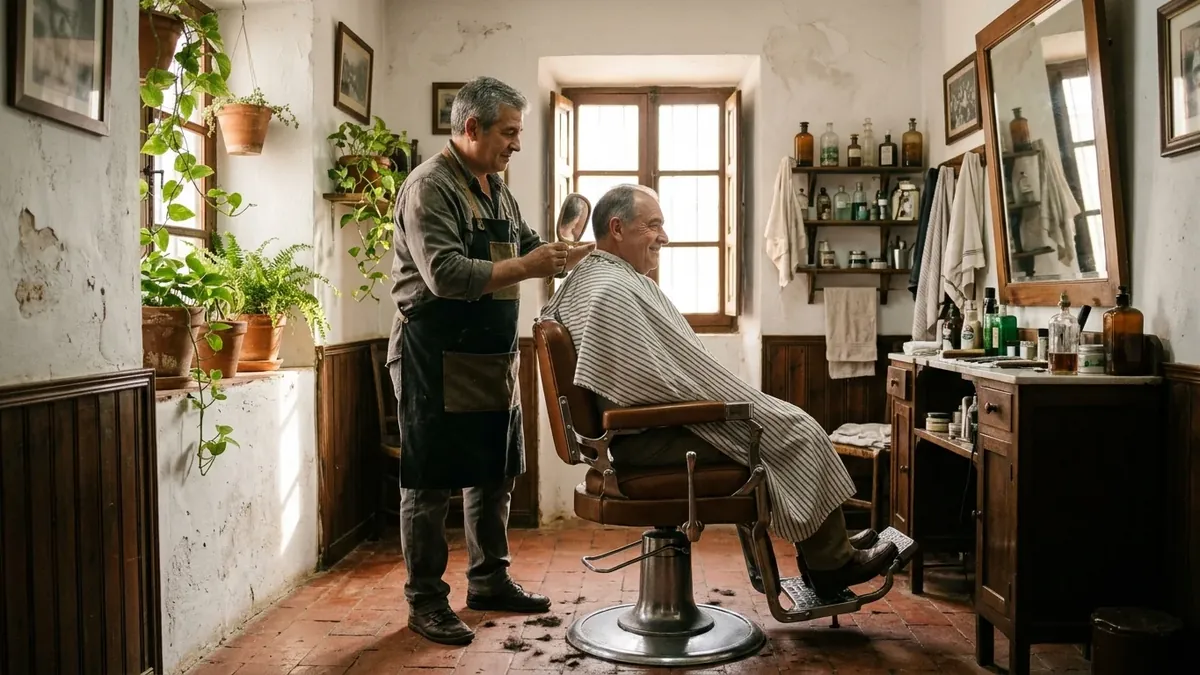
Let's go back to the table. What decides whether you reach 200 regulars in six months or in two years is how many people come back after the first time. And the second visit is won, above all, on the first.
A few things that make the difference:
- Offer the next appointment before they leave. "Shall I book you in for five weeks' time?" It's the most profitable thing you can do. People who leave with an appointment booked come back; people who leave with "I'll give you a call" sometimes don't. You book it yourself there and then, with the client in front of you.
- Remember the person. How they like their cut, which colour you used, what you talked about. Write it down somewhere when you finish. Not having to explain everything again the second time is one of the things that builds loyalty most.
- Explain what you've done. "I've left it shorter at the sides because you have a cowlick here." People go back to someone who feels like they know what they're doing.
- A reason to come back. A stamp card works because it turns the next visit into a step towards something. If you start it on day one, a new client leaves with a stamp and a reason to complete the card. We explain it in the article on the digital stamp card.
- Make booking easy. If coming back means calling during opening hours and catching you free, many people put it off until tomorrow. If they can book from their phone whenever suits them, they come back sooner.
And don't forget the no-shows. A missed appointment in a business that's just starting hurts twice as much, because the slot usually stays empty. Asking for an email when people book, so a reminder arrives the day before, helps a lot. You'll find more ideas in the article on what to do when clients don't show up for their appointment.
What to measure in the first 90 days
At the start, everything is felt in your gut: today went well, today was terrible. A few numbers, written down every week, tell you whether you're really on track. You don't need software: a notebook by the till is enough.
| What to note | How | What it tells you |
|---|---|---|
| New clients this week | A tally mark for each person who comes for the first time | Whether what you do to get known is working |
| How they found you | Ask "how did you hear about us?" and write it down | Stop doing what brings nobody and repeat what does |
| How many come back | Of the new clients from six weeks ago, how many have returned | It's the figure that weighs most in the table at the top |
| Empty hours | Hours with no appointment at the end of each week | Which time slots you need to work on |
| Services a month | The total number of appointments seen | Comparing it with your goal from the table |
After three months you'll have something very valuable: data from your own business, not an imaginary one. If new clients arrive but don't come back, the problem is inside the shop. If the ones who come return but there are few of them, the problem is that people aren't finding you. They're different problems and they're fixed in different ways, which is why it's worth knowing which one you have.

Mistakes that keep happening when people open
- Opening without a Google profile. The first weeks are when most people in the neighbourhood search "what's that new place that's opened". If you don't show up, they go to the usual one.
- Giving your work away. Huge discounts bring people who don't come back and teach you to work cheaply. Better small offers, with an end date, that reward coming back.
- Opening hours that change every week. In a new business, people need to know when you're there. Stable, clearly displayed hours build more trust than opening longer without any order.
- Relying only on a directory that charges per client. Some booking platforms give you visibility but charge a commission on each new client who comes through them. It may pay off at the start, but do the maths first. We explain how in how to avoid booking commissions.
- Not measuring. Without noting where clients come from and how many come back, after three months you don't know what has worked.
- Waiting for people to call. Many clients, especially younger ones, never call. If they can't book in writing, they go somewhere else.
What AppMyBusiness does in all this (and what it doesn't)
So you know exactly where it can help you and where it can't:
- Your own app, free, in a few minutes. With templates by sector, your logo and your colours. It installs on the client's phone without going through the App Store or Google Play.
- Online bookings 24 hours a day, with your link and your QR code for the window, your cards and your Google profile. Unlimited appointments and no commission per appointment, included in the free plan.
- A showcase with up to 20 services or products, with photo, description and price, so nobody has to ask how much it costs.
- An email reminder the day before, if the client leaves their email when booking, and appointments added by hand from the dashboard for anyone who asks in person or by phone.
- With the Pro plan: a stamp card, where you can also see who comes most and when each client last came in; a QR code on your screen so the client can leave you a Google review when the appointment ends; phone alerts to clients who have accepted them; and your app's page indexable on Google, as long as it has a full description, the address and at least three services.
What it doesn't do: it isn't a directory or a showcase of thousands of businesses, so it won't bring you clients who don't know you. Nor does it create your Google profile or run your Instagram. What it does is let anyone who finds you book without calling, give anyone who comes once reasons and ease to come back, and do all that without costing you a commission per client. For a business that's just starting, which is exactly when every client counts, that difference matters.
The app is created and published for free in a few minutes, with no card. The Pro plan costs €9.90 a month VAT included, with no contract: you can turn it on once you start having clients who come back. We have pages made for hair salons, barbershops and beauty salons.
Frequently asked questions
How do I get clients for a hair salon I've just opened?
Start with what's nearby: create your Google profile before you open, introduce yourself in person to the shops on your street with cards that carry your booking link, put your prices on display and ask your first real clients for a review. After that, focus on getting them back: offer the next appointment before they leave and give them a reason to return, such as a stamp card.
How many clients does a hair salon or barbershop need to be profitable?
It depends on your costs and prices, but the calculation is simple: divide your fixed costs plus the salary you want by what each service leaves you. With €1,500 in costs, a €1,200 salary and €15 per service, that's 180 services a month, or about 207 regular clients if each one comes every five weeks.
Is an opening discount a good idea?
A small one with an end date, yes. Big discounts attract bargain hunters who leave when you charge normal prices. Rewarding the second visit works better than giving away the first, because what you need is for people to get into the habit of coming back.
How long does it take to fill the book of a new business?
It varies a lot depending on the area, the competition and what you do to get known, so be wary of any fixed figure. What's useful is to measure new clients every week and how many come back after six weeks: that tells you whether you're heading in the right direction and which part you need to improve.
Do I need a booking app if I've just opened?
It isn't essential, but it helps much more at the start than later: that's when you can't afford to lose someone who finds you at eleven at night and won't call. Your own app, like the one from AppMyBusiness, is published for free with no commission per appointment, so it doesn't add a fixed cost while you're getting started.
How we did the maths
The barbershop in the table is an example to show you the method, not data from any real business. Fixed costs of €1,500 a month (800 rent, 150 utilities, 350 self-employed social security and accountant, and 200 other costs). Average service of €17 with €2 of product: €15 left per service. Services needed = (costs + salary) / 15: 1,500 / 15 = 100; 2,700 / 15 = 180; 3,100 / 15 = 206.7, so 207. Per day, over 22 working days: 4.5, 8.2 and 9.4. A client who comes every five weeks makes 30.44 / 35 = 0.87 visits a month, so the regular clients needed are the services divided by 0.87: 115, 207 and 238. If five in ten new clients come back, 207 regulars need 207 / 0.5 = 414 new clients; if seven in ten come back, 207 / 0.7 = 296. The features and the price of €9.90 a month have been checked in the app as of today. We don't use outside statistics: the figure that matters is yours.