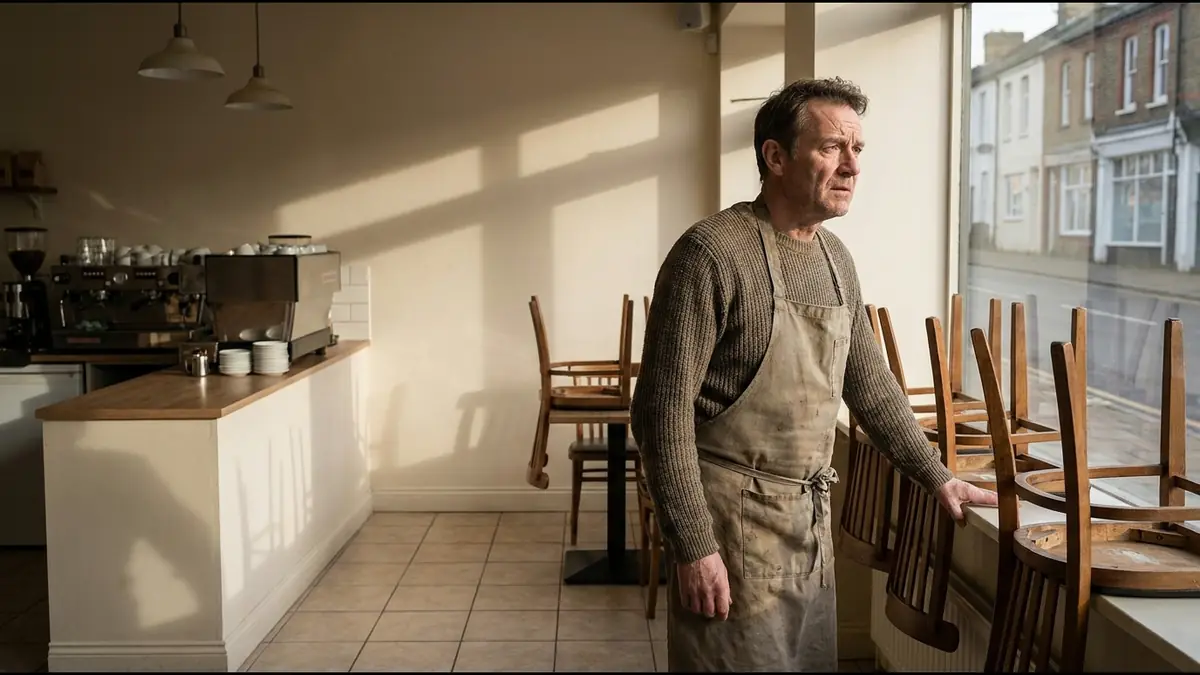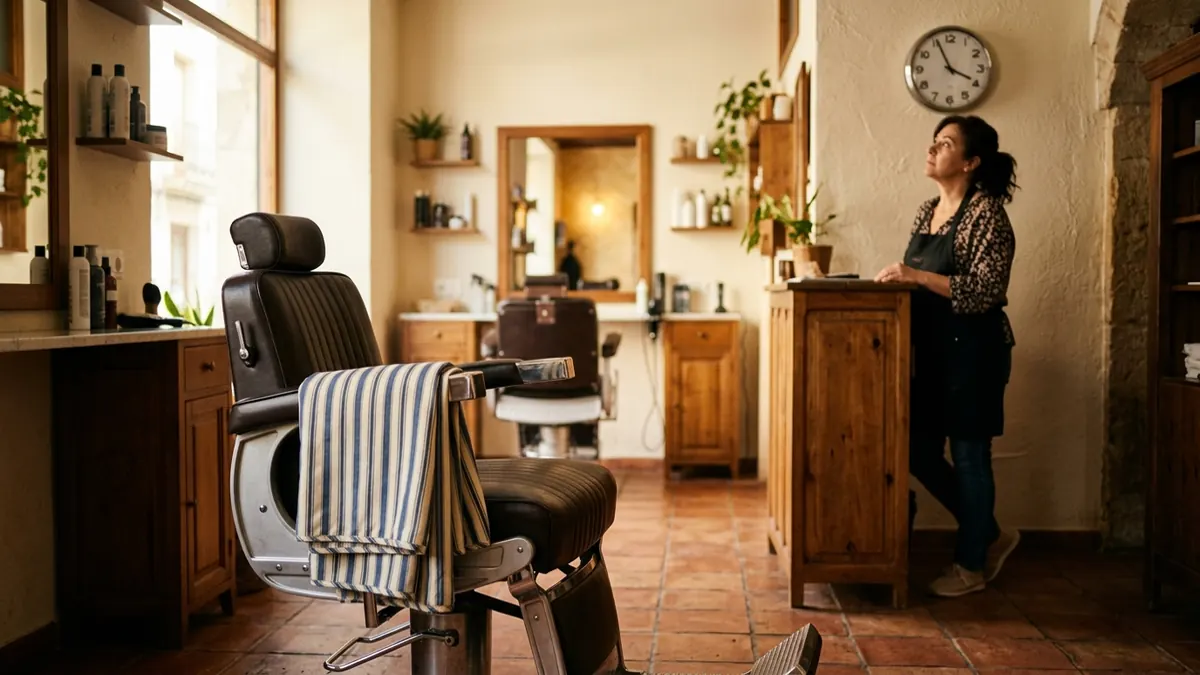
It's a quarter past five. Your five o'clock hasn't turned up. You send a message and get nothing back. By half past, you know they're not coming, and you also know nobody is going to fill that 45-minute gap now. You tidy up, make a coffee and stare at your phone with that mix of irritation and resignation that anyone who works by appointment knows far too well.
One no-show won't sink a business. The trouble is they rarely come alone. If you run a hair salon, a barbershop, a beauty studio or a physio practice, it probably happens to you several times a month, and you've likely filed it under "part of the job". It doesn't have to be. There are very specific things that work, some of them have been measured in proper studies, and most of them cost nothing.
Here they all are, from the simplest to the most serious, with wording you can copy as it is.
What a no-show really costs you
Start by putting a number on it, because "someone flakes now and then" doesn't sting the way a figure at the end of the year does. Run the numbers with your own prices. Here's an example with round figures:
| Assumption | Value |
|---|---|
| Average price of a service | €25 |
| No-shows per week | 2 |
| Working weeks per year | 46 |
| Revenue you lose | €2,300 a year |
And that's only the part you can see. The part you can't see is worse: that slot could have gone to the person who rang on Tuesday and was told you were fully booked. Maybe they went somewhere else and never came back. With a colour appointment or a 90-minute treatment, the numbers climb quickly.
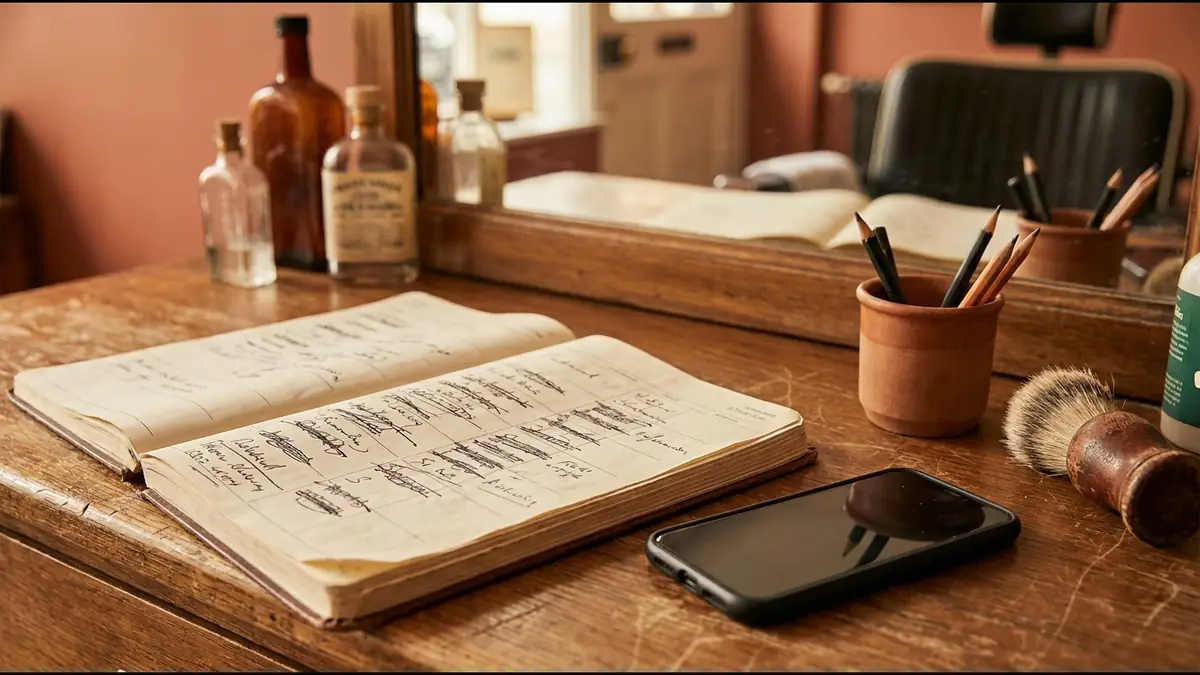
If you don't know how many no-shows you get, start there. For one month, write down every appointment that doesn't turn up without warning. A notebook is fine. Without that number you're working blind, and you won't know whether anything you try is making a difference.
Why people miss appointments (it's rarely bad faith)
It's tempting to assume the person who didn't show up is just rude. Sometimes they are. But most no-shows have far more boring explanations:
- They forgot. This is by far the most common reason. They booked three weeks ago, life happened in between, and at five on Tuesday they were somewhere else entirely.
- They feel awkward calling to cancel. They'd rather not explain themselves, and if the only way to let you know is to phone, they don't.
- They don't know how. Your number isn't to hand, someone else booked for them, or they booked through Instagram and can't find the message.
- Missing it costs them nothing. No money, no awkward conversation, because they won't see you again for another two months.
It even happens with things that matter a lot more than a haircut. In England, the NHS estimates that one in every twenty GP practice appointments is missed with little or no notice, at a cost of £216 million a year (NHS England). In Spain, more than 11 million primary care consultations are lost each year because the patient doesn't turn up. That's under 4% nationally, but some regions are above 11%, according to figures collected by El Español in 2024.
The good news about forgetting being the main cause is that forgetting can be fixed.
What the research says (and what you can use tomorrow)
Public healthcare systems have been fighting this problem for years, and because they measure everything, there are studies with pretty clear results. Three of them are worth knowing.
A reminder works, and you don't need to phone
A Cochrane review, from the organisation that pools and assesses clinical trials, concluded that text message reminders increase attendance compared with no reminder at all. It also found they work about as well as a phone call. In two of the studies, the cost per patient who actually attended was 55% and 65% lower with a text than with a call. For a salon, that means you don't need to spend your evenings on the phone confirming appointments. A message does the same job.
How you word it matters too
In 2015, researchers published two trials run in London hospitals that tested different versions of the same reminder. The one that added a sentence explaining what each missed appointment costs the hospital cut missed appointments from 11.1% to 8.4%. And one interesting detail: when the same idea was expressed in vague terms, without the specific figure, the effect was noticeably smaller.
You don't have to put a price on your time in the message, which in a small business can come across as a telling-off. What you can borrow is the idea: explain in one sentence what happens when someone doesn't come. "If you can't make it, let us know and we'll give your slot to someone else" works for the same reason. It reminds people there's somebody on the other side waiting for that time.
When clients write the appointment down, they commit more
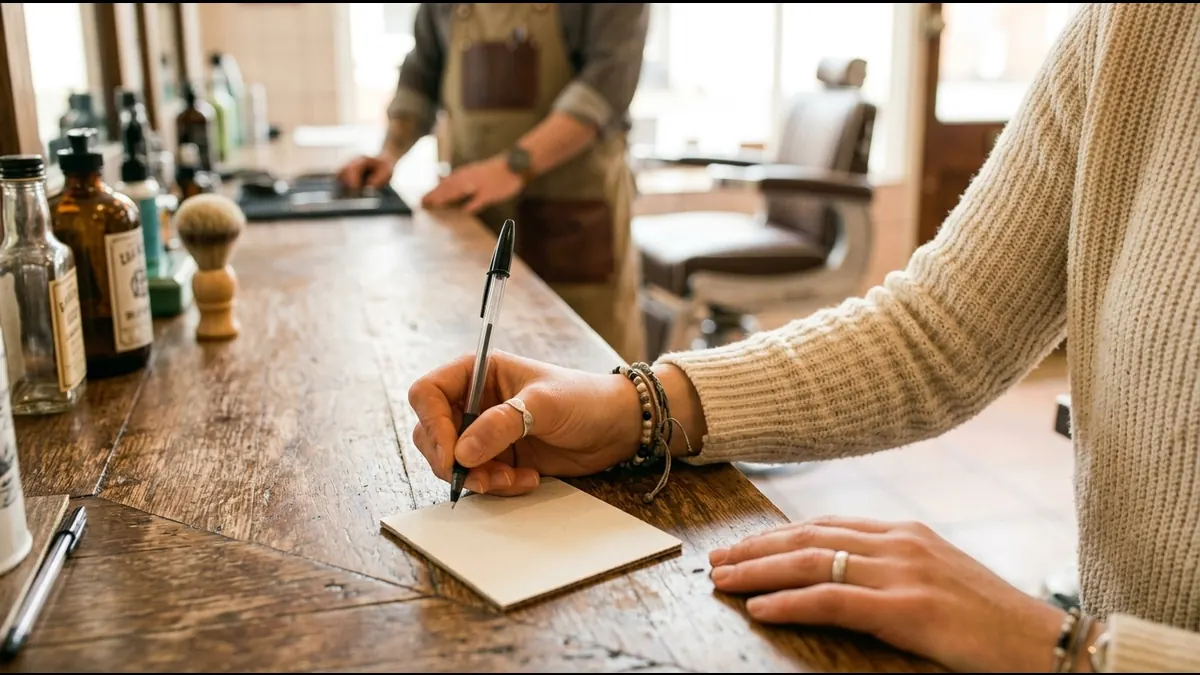
This is our favourite, because it's free. At two health centres in Bedfordshire, England, they tried something very simple: instead of the receptionist filling in the date and time on the appointment card, they handed patients a blank card and let them write it themselves. Missed appointments fell by 18% compared with the average of the previous six months.
The explanation is that when you do something with your own hands, it feels like your commitment rather than something someone else noted down for you. The same thing happens when a client picks their own time in an online booking calendar instead of accepting the one you offer over the phone.
Seven ways to reduce no-shows, from easiest to most serious
You don't need to do all of them. Start with the first two, measure for a month, and then decide whether you need to go further.
1. Send a reminder the evening before
This is the single measure that prevents the most no-shows. The evening before is the best moment: the appointment is close enough for the client to plan around it, and if they need to cancel you still have time to offer the slot to someone else. If someone booked a long way ahead, a second reminder a week before doesn't hurt.
A message that works:
Hi Laura, just a reminder about your appointment tomorrow, Thursday, at 5pm at Nerea Hair Studio. If you can't make it after all, just reply to this message and we'll give your slot to someone who's waiting. Thanks!
Notice three things: the person's name, the day of the week as well as the time (people plan by days, not dates), and a way to cancel that doesn't involve making a phone call.
2. Let clients book by themselves
When a client opens an online calendar, looks at the free slots and picks one, they're doing exactly what the patient writing their own card did. The time is theirs, they chose it. They also book when it suits them (often at eleven at night from the sofa) rather than when you're free to answer the phone. If you want to see how to set it up without overcomplicating things, we cover it in how to manage your bookings online.
3. Make cancelling easy, even if it sounds backwards
It sounds odd, but the easier it is to cancel, the fewer no-shows you'll have. The person who can't come and has to phone you to say so often doesn't phone. The person who can reply to a message with "sorry, can't make it" usually does. A cancellation with a day's notice is a slot you can sell again. A no-show isn't.
4. Know who to offer free slots to
When someone cancels, you need to move that slot quickly. It helps a lot to keep a short list of clients who've told you "if anything comes up, let me know". You can also post it on your WhatsApp status or send a quick notice to your clients: "I've just had a 6pm slot free up today". A slot announced in good time fills up fairly easily. Our guide to push notifications for local businesses explains how to do it without annoying anyone.
5. Keep track of who doesn't turn up
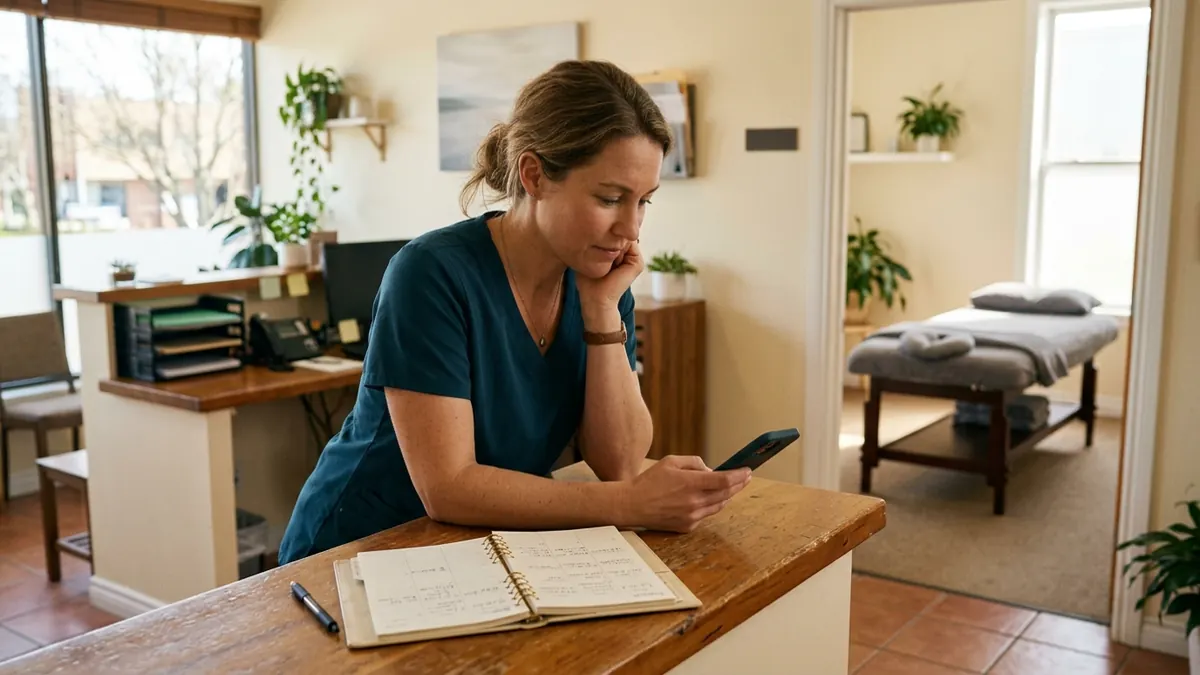
Once you start writing down no-shows, you'll notice a pattern: it's nearly always the same people. A handful of clients account for a big share of missed appointments. Knowing who they are lets you treat someone who missed once in three years differently from someone who's done it three times this quarter. You don't say a word to the first one. The second one gets asked for a deposit next time, or offered the slots that are least in demand.
6. Write down your cancellation policy
It doesn't need to read like a contract. Two clear sentences, placed where clients will see them when they book: on your website or in the confirmation message. Something like this:
If you can't make it, please let us know at least 24 hours in advance so we can give your slot to someone else. If you miss two appointments without letting us know, we'll ask for a small deposit on future bookings.
What matters is that it's true and that you stick to it. A rule that's never enforced ends up being worse than having no rule at all.
7. Ask for a deposit on longer services
This is the most effective measure of all, and also the one that scares people most, because you assume you'll lose clients. Used sensibly, that hardly ever happens. A few ideas so it doesn't backfire:
- Only ask for it on long or expensive services: a colour with highlights, a two-hour treatment, a first session.
- Or only from new clients and people who've already stood you up. The client who's been coming for ten years doesn't need to leave a deposit.
- Keep it to a small part of the price and take it off the final bill. It's not a fine, it's a commitment.
- Explain beforehand, in writing, how much it is, what happens if they cancel in time and what happens if they don't turn up. Charging someone for something they didn't know they'd have to pay is the quickest route to a bad review.
What you're better off not doing
Some very understandable reactions end up costing you:
- Calling clients out on social media. Every now and then you see a post along the lines of "this man stood us up", complete with a name. Apart from looking bad, publishing a client's details can land you in trouble under data protection law.
- Double-booking "just in case". Some airlines do it, and you know how that ends. On the day both people turn up, one of them waits forty minutes and leaves with a worse impression than if you'd never given them the appointment.
- Charging without warning. Even if you're in the right, if the rule wasn't clear the client will see it as unfair.
- Getting annoyed with people who do cancel. If the client who cancels a day ahead gets a frosty reply, next time they won't bother. Always thank them.
How your own app helps you get fewer no-shows
Everything above can be done with a notebook, a phone and a lot of discipline. The problem is the discipline: sending twenty reminders by hand every evening is exactly the kind of job that gets dropped in the busiest week. That's why it's better to let a system do it for you.
With your own business app, like the ones built with AppMyBusiness, clients book from their phone by choosing a free slot themselves, at any time and without calling you. If they leave their email when booking, the app sends them a reminder the day before with the time and your phone number in case they need to let you know. In your dashboard you can mark any appointment as "No-show", and your stats show how many you've had this month, which is exactly the number we suggested measuring at the start. And when a slot opens up, you can send a notification to clients who have your app installed to offer it.
If you'd like to see what yours would look like, you can create your app for free in a few minutes and try it before deciding anything. And if you're still weighing up whether automating bookings is worth it, have a look at how much time automated booking saves you.
Frequently asked questions
What no-show rate is normal for a hair salon?
There are no official statistics for hair salons and beauty businesses, and the figures some software companies publish rarely explain where they come from. As a reference point, public healthcare systems see missed-appointment rates of around 4 to 5% (one in twenty GP practice appointments in England, and under 4% of primary care appointments across Spain), with some areas above 11%. The useful thing is to measure your own rate for a month and compare yourself against it after making changes.
Can I charge a client who doesn't show up?
Only if you agreed it beforehand, usually through a deposit paid at booking and terms the client knew about. Charging after the fact for something that wasn't announced leads to disputes and bad reviews. If you're unsure how to word the terms for your business, check with your accountant or a legal adviser.
When is the best time to send an appointment reminder?
The evening before. It gives the client time to plan and gives you time to fill the slot if they cancel. If the appointment was booked several weeks in advance, it's worth adding another reminder a week before.
Is it better to send reminders by WhatsApp, text or email?
The best channel is the one your clients actually check. Research shows a written message works as well as a phone call and takes far less of your time. What matters is that it always goes out, includes the day and time, and lets people cancel by replying instead of having to call.
Will asking for a deposit make me lose clients?
It can if you ask everyone and don't explain it. If you limit it to long services, new clients or people who have already missed appointments, and take it off the final price, most clients understand. The person who won't leave a deposit for a two-hour appointment is often exactly the one most likely not to show up.
Sources
- Gurol-Urganci I. et al. Mobile phone messaging reminders for attendance at healthcare appointments. Cochrane Database of Systematic Reviews, 2013.
- Hallsworth M. et al. Stating Appointment Costs in SMS Reminders Reduces Missed Hospital Appointments. PLOS ONE, 2015.
- Martin S. J., Bassi S. and Dunbar-Rees R. Commitments, norms and custard creams: a social influence approach to reducing did not attends. Journal of the Royal Society of Medicine, 2012.
- NHS England. Missed GP appointments costing NHS millions, 2019.
- El Español. Millones de españoles faltaron en 2023 a su cita médica (in Spanish), 2024.