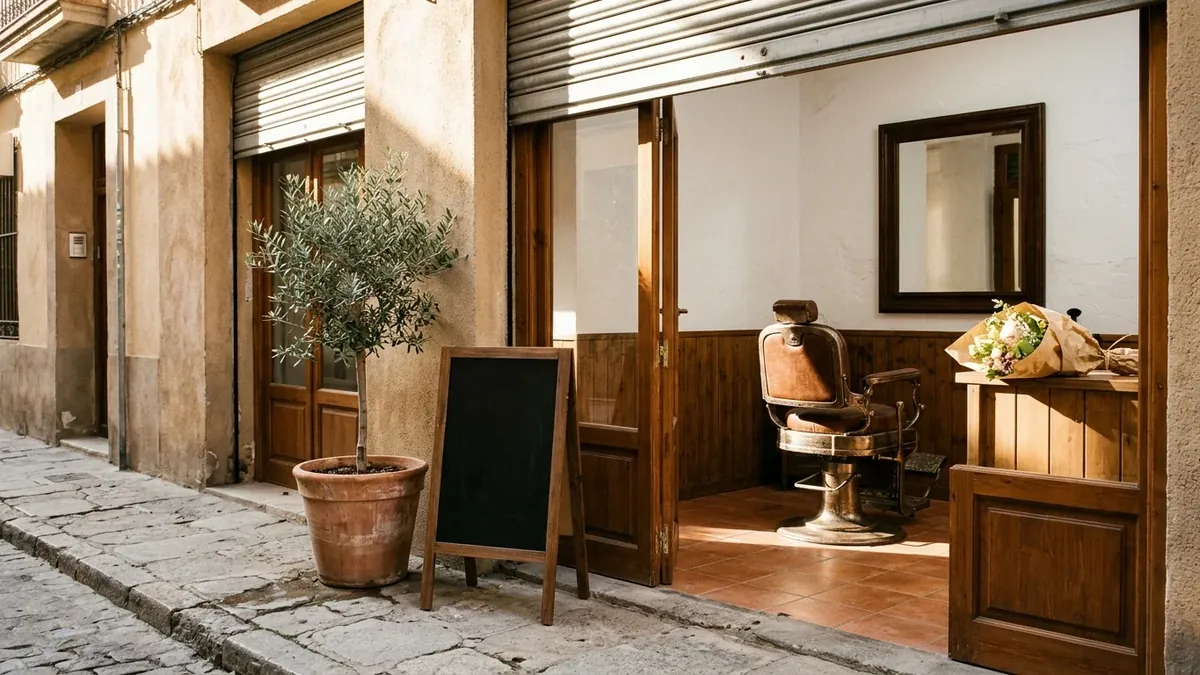
How to Sell Products in Your Hair Salon or Barbershop Without Feeling Like a Salesperson
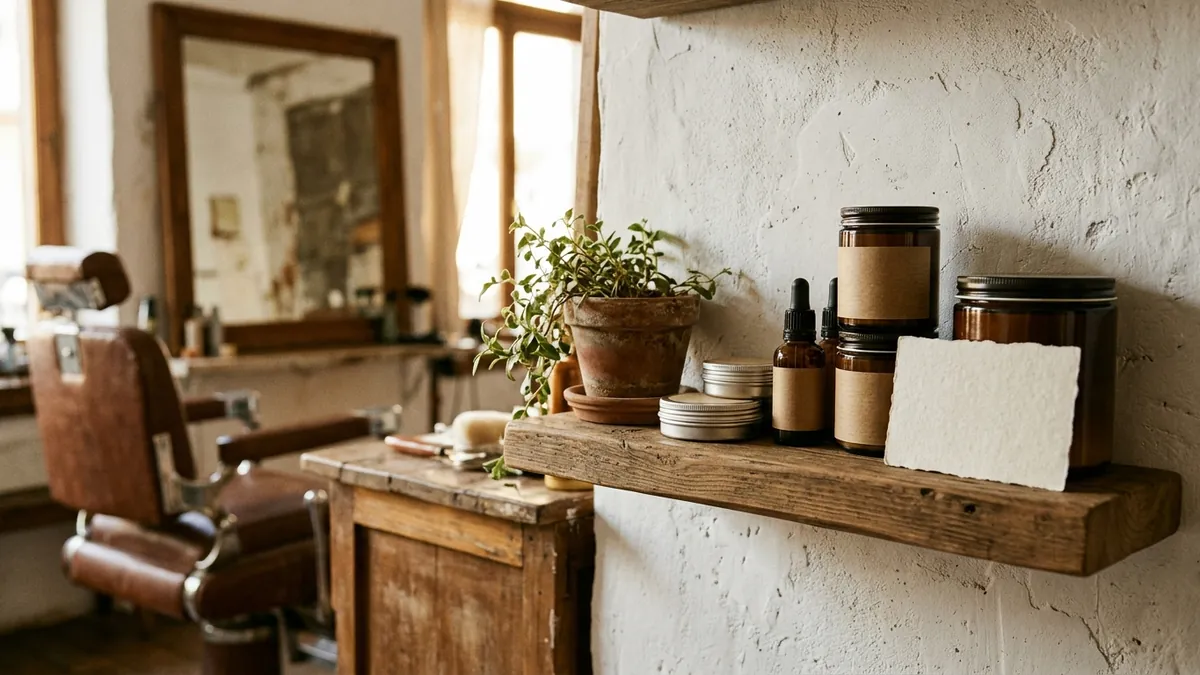
You finish the cut, run a little wax through your client's hair, shape it and he looks in the mirror, delighted. "Hey, what did you put on? I like how it looks." You tell him the name, he nods, pays for the cut and leaves. That same week he buys something similar at the supermarket that's nothing like it, and next time he comes in, he tells you it never looks the same at home.
It happens every day in lots of hair salons and barbershops. The client wants something, you know exactly what suits them, and the sale still doesn't happen, usually out of awkwardness: hardly anyone who works with their hands likes feeling like a salesperson. The good news is that selling products in an appointment-based business isn't really about selling. It's about recommending what you already use, well, and making it easy for whoever asks.
The short answer: choose a few products, ones you use every day and that help the result last at home; explain what you're using while you work, without pressure; display them by the counter with a clear price; and add them to your app's showcase so your clients know you have them. Start with little stock and note what sells. Below you'll find the numbers on what it can mean, which products to stock, how to recommend without making anyone uncomfortable and how to manage stock without tying up money.
What it can mean, in numbers
Selling products has an advantage no service has: it doesn't take up the chair. A haircut needs half an hour of your time; selling a tin of wax, a minute. So even if the amount looks small, the margin each sale leaves is money coming in without the book having to stretch.
Picture a barbershop doing about 180 services a month. It sells an average product at €14, which costs it €7 from the supplier, so each sale leaves €7 of margin. This is what it adds up to depending on how many clients take something home:
| Clients who buy | Sales a month | Margin a month | Margin a year |
|---|---|---|---|
| 1 in 20 | 9 | €63 | €756 |
| 1 in 10 | 18 | €126 | €1,512 |
| 1 in 5 | 36 | €252 | €3,024 |
The middle row is the most realistic place to start, and it's equivalent to what about a hundred more appointments a year would leave if each one gave you €15 of margin. A hundred appointments are fifty hours in the chair. With products, that money comes in without working a single extra hour.
There's another effect the table doesn't show: a client who uses what you recommended at home keeps their cut or colour looking better between visits, looks better and connects that with you. A good product, well recommended, also builds loyalty.
Your business's numbers will be different, especially the margin, which depends a lot on the brand and the supplier. Do the maths with your own prices before you buy anything.
What to sell (and what not to)
The most common mistake is filling a shelf with products "just in case". Lots of stock ties up money, makes the place feel like a shop and leaves the client not knowing what to look at. Having few products works much better, five to eight, each with a clear reason for being there.
Three questions make a good filter:
- Do I use it every day? If you use it in your work, you know it, you can explain it and the client has just seen the result on their own head. There's no better demonstration.
- Does it help keep what I've just done? The shampoo for a freshly done colour, the wax for the cut you've just given, the oil for the beard you've just trimmed. That way you're not selling, you're making your work last.
- Is it easy to find cheaper in the supermarket next door? If so, don't compete there. Better professional products that clients can't find just anywhere.
Some ideas depending on the type of business:
- Barbershop: a wax or pomade, a beard oil or balm, a shampoo for hair and beard and, if you do shaves, something for afterwards.
- Hair salon: shampoo and mask for coloured hair, a heat protector, a styling product and something specific for the kind of client you see most.
- Beauty salon: the home-care products you recommend after each treatment, so the result lasts.
And a golden rule: don't sell anything you wouldn't use yourself or recommend to someone in your family. The day a client takes home something that doesn't suit them because you told them to, you lose more than a sale.

How to recommend without feeling like a salesperson
The key is for the recommendation to come from the work you're doing, not from a prepared pitch. You don't need to "offer" anything: just say what you're doing and why, at the right moment.
- While you work, explain what you're using. "I'm putting a little of this on because your hair is very fine and it'll hold the volume." That's not selling, it's information. Many clients will ask on their own.
- When you finish, show them how to apply it. With their own hair and in front of the mirror. Most people buy a product and use it wrong, and then think it doesn't work.
- Put the product in their hand. Let them touch it, smell it, see the size. A product on the shelf is decoration; in the client's hand, it's a possibility.
- Say the price naturally, and don't push. "It's €14 and it lasts about three months." If they say no, fine: they'll remember next time.
A few lines that work because they don't sound like selling:
When the client asks: "It's a matte pomade, the one I use with almost every cut like this. An amount the size of a lentil is enough for all your hair. If you like, I'll show it to you at the counter."
When you finish a colour: "To keep your colour looking like it does today, the most important thing is the shampoo. Supermarket ones strip it faster. This is the one I'd recommend, and if you don't want to buy it here, at least make sure it's one for coloured hair."
Look at the last part of the second example. Making it clear that what matters is the care, not that they buy it from you, is what makes the client trust your recommendation. And, paradoxically, it's what sells best.
How to price them
With products, you don't fully decide the price yourself: clients can look it up on their phone in ten seconds. That's why it's worth following three steps before you put the label on:
- Check the recommended retail price. Many professional brands state one, and it's the reference your client will find if they look it up.
- Look the product up online. If online shops sell it for much less, your client will see that. You don't need to match the lowest price out there, but you shouldn't be far off either.
- Work out what it leaves you. Selling price minus what it costs you, bearing in mind that the price on the label includes VAT. If what's left doesn't justify the shelf space and the money sitting still, it may not be a good product for your shelf.
A trick that works: round prices are easier to say out loud. "It's €14" comes out naturally; "it's €13.85" sounds like arithmetic. And if you sell sets, give the set a round price too, a little below buying the products separately, so it makes sense to take them together.
Think about size as well. A large size leaves more margin per unit, but a small one sells better the first time, because the client is risking less. If a product comes in both, start with the small one: people who try it and like it come back for the big one.
And don't confuse price with discount. Cutting the price of a product that sells slowly rarely fixes it; usually the problem is that it isn't seen, isn't explained or doesn't suit your clients. Before you mark it down, try moving it or recommending it for a month to the people it really suits.
Where to put them in the shop
A product nobody sees doesn't sell, but a badly placed one doesn't either. A few simple guidelines:
- Near the counter, at eye level. It's where the client waits while you take payment, with their wallet already in hand.
- Few and neatly arranged. A shelf with six well-placed products and some space around them looks better than a packed unit.
- The price on show. A small label or a handwritten card. Many people won't ask the price out of awkwardness, and if they can't see it, they don't buy.
- An open tester. So people can touch and smell without opening a new one.
- One line per product. "For fine hair that loses volume." It helps clients find theirs without asking.
Your products, on your client's phone too
Clients don't think about their shampoo while they're in your chair. They think about it one morning in the shower, when it's running out. If at that moment they know you have it and what it costs, they can ask for it at their next appointment or pop in to get it.
That's why it's worth having your products somewhere clients can see them outside the shop. In AppMyBusiness, your app's showcase takes up to 20 items with a photo, short description and price, including on the free plan. Your services and your products can sit there, in the same list. A few tips to make the most of it:
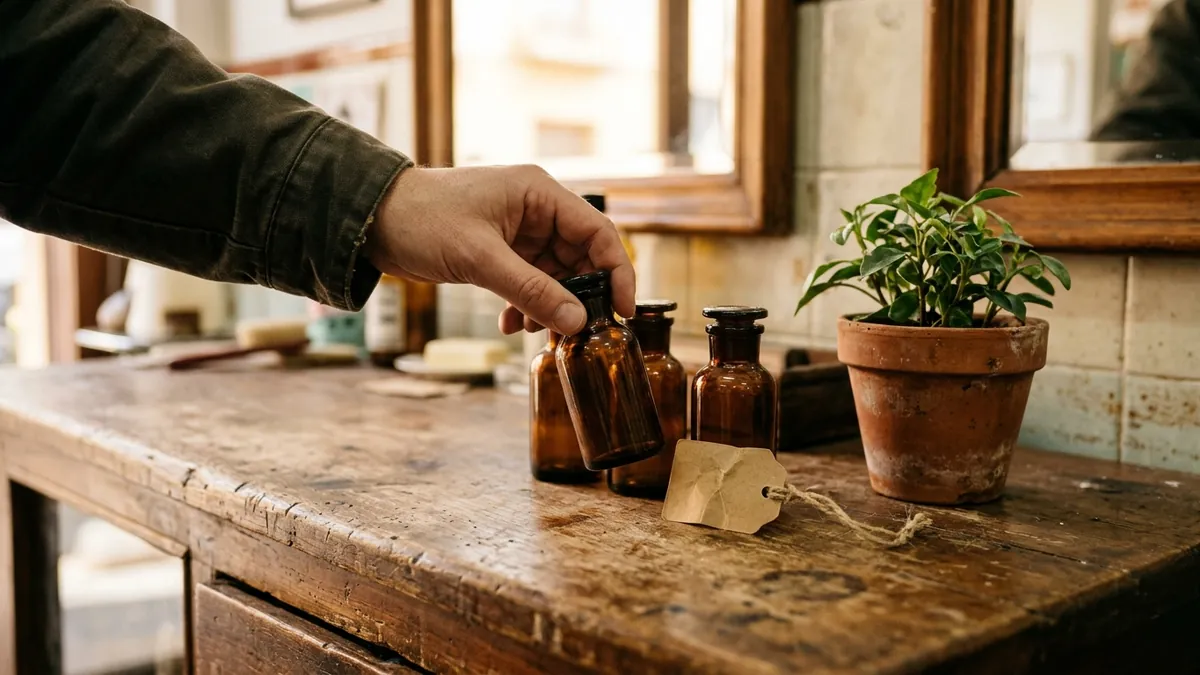
- A real photo of the product in your shop, on the counter or on your shelf, rather than the manufacturer's catalogue shot.
- A description that says who it's for, not what the brand says. "For beards that itch" is clearer than the ingredients list.
- The price, always.
- Few, and the ones that sell best. The showcase is shared with your services, so don't fill it with products.
Bear in mind that the app doesn't sell or take payment online: the product is bought in the shop. What it does is let your clients know you have it and what it costs, which is exactly what's usually missing. If you have the Pro plan, you can also send a phone alert when something new and worthwhile comes in, always sparingly: an alert now and then is welcome, one every week gets muted. We cover it in our guide to push notifications for businesses.
Stock: start small and keep notes
The most common fear when you start selling products is being left with boxes you can't shift. Two habits avoid it: buy little and write things down.
- Start with the minimum. Five or six products, three or four units of each. With products costing €7, that's less than €200 of initial investment.
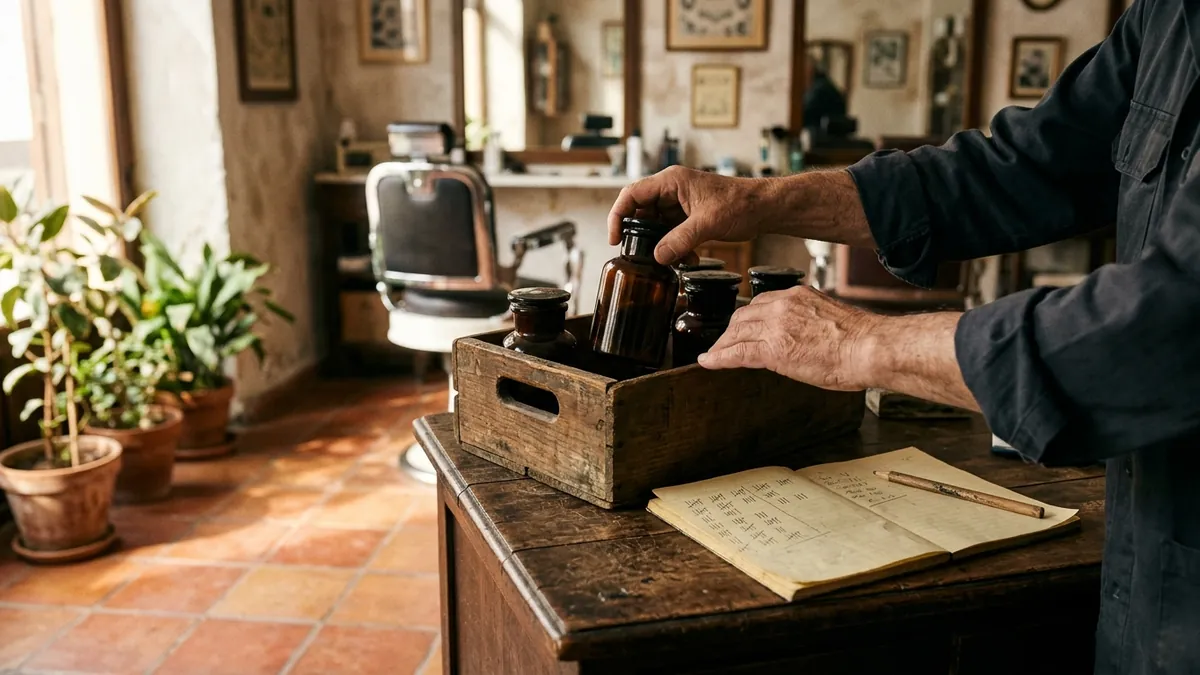
- Note every sale. One line in a notebook by the till: which product and which day. At the end of the month, count up.
- Restock what moves; let go of what doesn't. If a product hasn't sold in two or three months, don't order it again. If another always runs out, buy a bit more.
- Check the dates. Many cosmetics have an expiry date or a period of use once opened. Sell what came in first, first.
- Ask the supplier about minimums. Some require high minimum orders. If that's your case, start with a single brand or find a distributor who lets you order less.
An opportunity coming up now: Christmas presents
Of the whole year, December is when most people are looking for something small and useful to give. A product you recommend, in a paper bag with a ribbon, is an easy present for anyone who doesn't know what to buy: a partner, the office Secret Santa, a little something for mum.
You don't need anything complicated. A couple of simple sets (for example, shampoo and wax, or beard oil and balm) at a round price, nicely presented and on show from the end of November. If you also sell gift cards for services, the product set is the perfect companion. You'll find more ideas for getting December ready in our article on how to plan your Christmas bookings.
Common mistakes when selling products
- Too many products. A full shelf ties up money and confuses people. Better a few products with a clear reason.
- Selling what you don't use. If you don't use it in your work, you can't explain it and the client notices.
- Pushing. Offering a product at every visit to every client gets tiresome. Recommend when it makes sense and let people ask.
- Hiding the price. People who can't see the price don't ask and don't buy.
- Prices far above online. Clients will check on their phone. You don't need to be the cheapest, but you do need a reasonable price for a professional product that comes with advice included.
- Not keeping notes. Without knowing what sells, you end up restocking on instinct, with boxes forgotten in the stockroom.
What AppMyBusiness does in all this (and what it doesn't)
So you know exactly where the app helps you and what will still be down to you:
- A showcase with up to 20 services or products, with photo, description and price, in your own app. Included in the free plan.
- Online bookings 24 hours a day, with your link and your QR code, with no commission per appointment. If someone wants to pick up a product at their next appointment, they can mention it in the booking note.
- With the Pro plan: phone alerts to clients who have turned them on (useful for saying something new has arrived or that you have Christmas sets) and a stamp card to reward the ones who come back.
What it doesn't do: it isn't an online shop, so it doesn't sell or take payment for products online and it doesn't track your stock. Nor does it split products and services into separate sections of the showcase: they appear in the same list. For stock, a notebook or a simple spreadsheet is still the most practical option. What the app does is let your clients see what you have and what it costs from their phone, without asking.
The app is created and published for free in a few minutes. The Pro plan costs €9.90 a month VAT included, with no contract. We have pages made for hair salons, barbershops and beauty salons.
Frequently asked questions
Is it worth selling products in a hair salon or barbershop?
In most cases, yes, because each sale leaves margin without taking up the chair. In a barbershop with 180 services a month, if one client in ten takes home a product with €7 of margin, that's about €1,500 a year. The key is to have few products, ones you use yourself, and to recommend them naturally.
Which products should a barbershop sell?
The ones you use every day that help keep the result at home: a wax or pomade, a beard oil or balm, a shampoo and, if you do shaves, something for afterwards. Better professional products that can't be found in any supermarket.
How do I offer products to clients without being pushy?
Explain what you're using and why while you work, show them how to apply it when you finish, put the product in their hand and say the price naturally. If they say no, don't insist. Recommending honestly, even saying that what matters is the type of product and not where they buy it, is what builds the most trust.
How much stock do I need to start selling products?
Very little: five or six products with three or four units of each. With an average cost of €7, the initial investment is around €150 to €200. Note every sale, restock what moves and stop ordering what hasn't sold in two or three months.
Can I sell products from my business's app?
In AppMyBusiness you can show them in your app's showcase with photo, description and price, alongside your services, including on the free plan. The purchase happens in the shop: the app doesn't take payment online. It lets your clients know what you have and what it costs before they come in.
How we did the maths
The barbershop in the table is an example to show you the method, not data from any real business. 180 services a month; average product sold at €14 and costing €7, €7 of margin per sale. One in twenty: 180 / 20 = 9 sales, 9 × 7 = €63 a month and €756 a year. One in ten: 18 sales, €126 and €1,512. One in five: 36 sales, €252 and €3,024. The hundred equivalent appointments come from 1,512 / 15 = 100.8, with €15 of margin per appointment, and a hundred half-hour appointments are fifty hours. Initial stock: six products × four units × €7 = €168. The 20-item showcase, shared by services and products, and the price of €9.90 a month have been checked in the app as of today. We don't use outside statistics: the figure that matters is your own sales.