Push notifications for local businesses: the guide nobody told you about
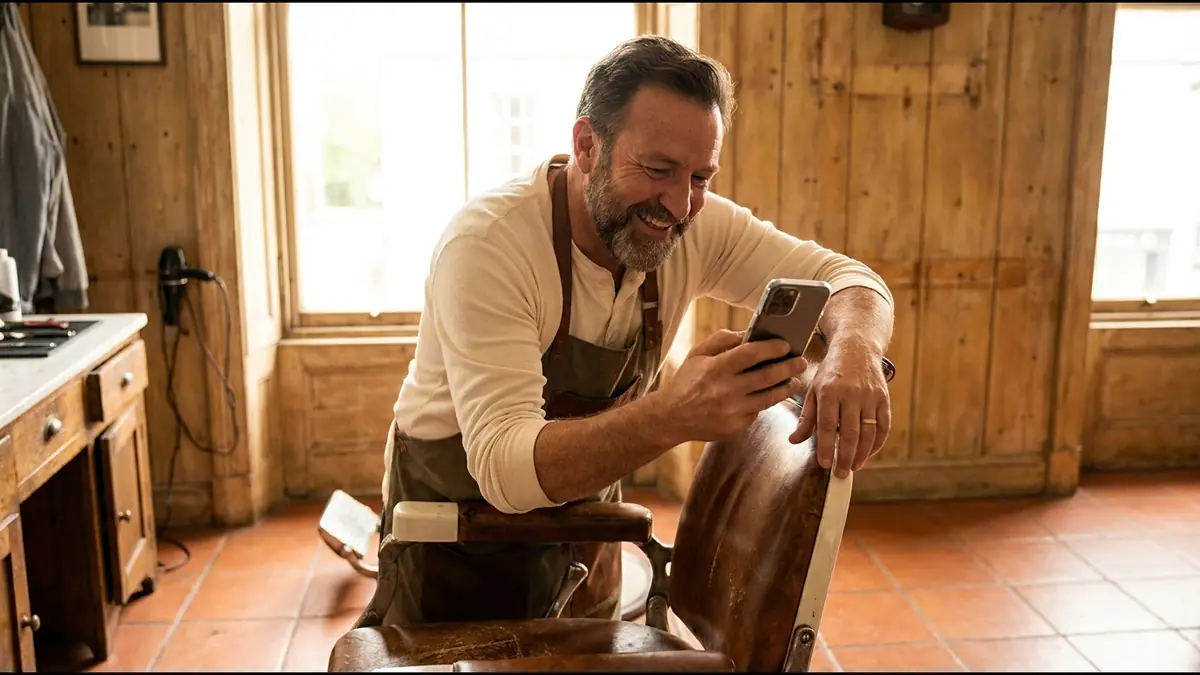
There's a scene that plays out every single day in thousands of businesses. The hair salon with a free slot at 5 PM that nobody knows about. The restaurant that's prepared a fantastic weekend special and hopes people will just show up. The clothing shop that's just received a new collection and posts on Instagram, praying the algorithm won't bury it.
They all share the same problem: reaching their customers at the right moment. And they're all using tools that, let's be honest, don't work like they used to.
Social media shows your posts to 5-8% of your followers. Email marketing has a 20% open rate if you're lucky. Flyers end up in the bin. And phone calls? That's last century.
But there's something that actually works. Something you carry in your pocket all day. Something you check an average of 96 times a day. Your phone.
What are push notifications (and why should you care)
A push notification is that message that pops up on your phone screen even when you're not using the app. It appears, your phone buzzes, you read it. Immediate, direct there's no way to miss it.
You probably get them every day from WhatsApp, your bank, or the weather app. But what most people don't realise is that any business can send them to their own customers if they have their own app.
And here's where it gets interesting:
- 90% read rate — compared to 20% for email. Send a push to 100 customers and 90 will read it. With email? Maybe 20.
- Instant delivery — no algorithms, no spam folders. It arrives in seconds.
- Free after setup — unlike Google or Facebook ads, you don't pay per message.
- No middlemen — you don't need Meta, Google, or TikTok to decide if your message deserves to be seen.
Real examples: how the busiest shops actually use push notifications
This isn't theory. These are things that work in real businesses, in real cities, with real customers.
🔴 The barbershop that fills up on Mondays
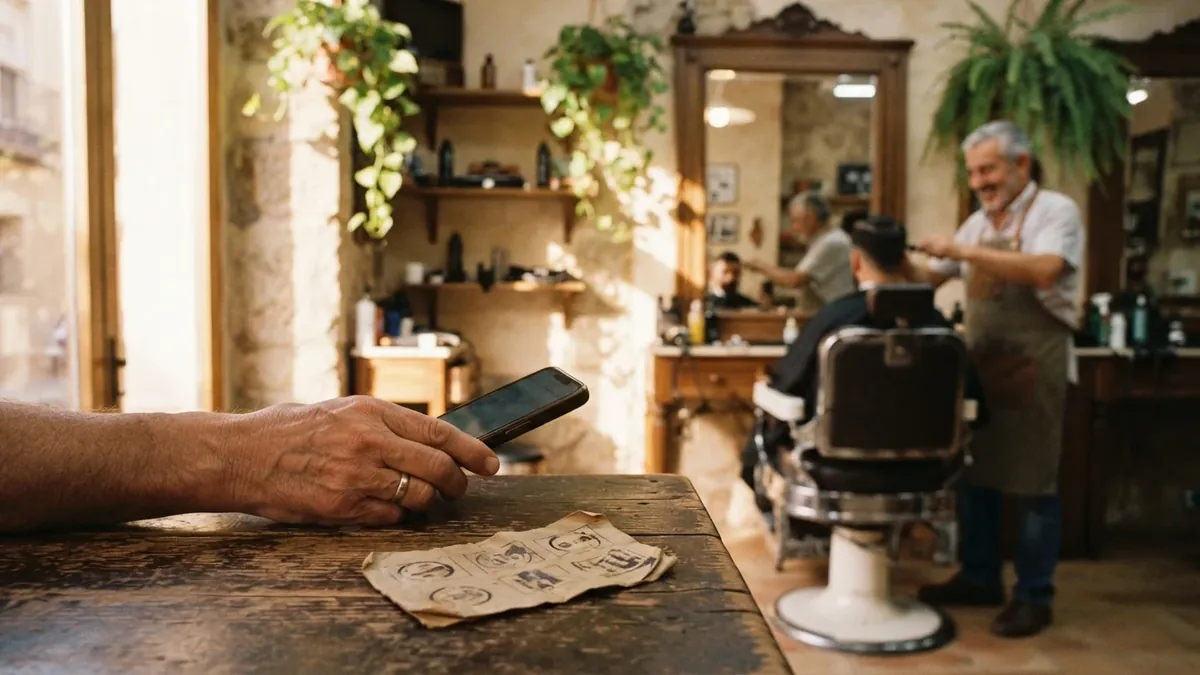
Mondays are the slow day for any barbershop. Carlos, a barber in Zaragoza (Spain), thought it was inevitable until he tried something simple: every Sunday at 7 PM he sends a push saying something like "Tomorrow Monday, cut + beard trim for €14 (appointment only)". Result: since he started doing this, Mondays are as busy as Fridays.
The extra cost? €0. Push notifications are unlimited with his app plan.
🔴 The restaurant that sells out the daily menu before 11 AM
María runs a lunch-menu restaurant in Málaga. Every morning, once the chef has decided the menu, she takes a photo, uploads it to her app's catalogue and sends a push to all customers: "Today: homemade ham croquettes + Iberian pork with Pedro Ximénez sauce. Book your table."
The result? By 11 AM all 24 tables are booked. Before push notifications, she'd typically have 5-8 empty tables each day.
🔴 The dental clinic that never loses patients
Dental clinics lose up to 30% of patients who simply forget to come back for their annual checkup. Dr Sánchez in Toledo uses push notifications as reminders: "It's been 11 months since your last cleaning. Shall we book your annual checkup? 🦷" Her patients appreciate the nudge and her schedule stays full.
🔴 The flower shop that tripled Valentine's Day sales
Elena runs a flower shop in Murcia. Three days before Valentine's Day she sent a push: "Valentine's is Friday. Don't leave it to the last minute 🌹 Order through the app and we'll have it ready to collect." The response was so overwhelming she had to hire extra help. The year before, without push notifications, she'd sold half as much.
The difference between marketing and throwing money away
Let's be straight about the numbers, because that's what matters when you run a business and every euro counts.
Social media marketing
- Organic reach on Instagram: 5-8% of your followers
- Posting is free, but if you want people to actually see it, you have to pay
- Cost per click on ads: €0.30-1.50
- Getting 500 people to see your offer: €150-750 in ads
Email marketing
- Average open rate: 20%
- Tools like Mailchimp: free up to 500 contacts, then €13-350/month
- The real problem: most of your local customers won't give you their email. But they will scan a QR code.
Push notifications with your own app
- Read rate: 90%
- Cost per send: €0 (unlimited)
- Getting 500 people to see your offer: send one push and done
- Total cost: your app plan, €9.90/month
There's no comparison. And that's not us talking — any mobile marketing study from the last few years confirms it.
"Hold on — don't I need to publish on the App Store to have an app?"
This is the most common question, and the short answer is: no.
There's a technology called PWA (Progressive Web App) that lets you create apps that install directly on the customer's phone without going through the App Store or Google Play. The customer scans a QR code, the app opens in their browser, and they tap "Add to Home Screen". Five seconds later it's installed like any other app.
The advantages?
- No Apple Developer account needed (which costs €99/year)
- No waiting for Apple or Google reviews (which can take days or weeks)
- Updates are instant — change something and your customer sees it immediately
- Works on both iOS and Android with the exact same app
PWAs are the same standard used by Twitter, Starbucks, Pinterest, and Uber for their web versions. The difference is that now your barbershop can have one too.
How to start with push notifications for your business
No fluff. Here are the exact steps, no fine print.
Step 1: Create your app (5 minutes)
Go to the AppMiNegocio builder. Pick a template, add your business name, upload your logo and adjust the colours. It's as easy as setting up an Instagram profile. No coding needed. No tech knowledge required.
Step 2: Add your products or services (10 minutes)
Upload photos and prices of what you sell. Up to 20 products with images. If you run a restaurant, your menu. A hair salon? Your services and prices. A shop? Your featured items.
Step 3: Set up appointments (optional, 5 minutes)
If your business runs on appointments — barbershop, clinic, beauty salon, vet — switch on the booking system. Your customers can book directly from the app without calling.
Step 4: Display the QR in your shop
Print the QR code that the app generates automatically. Place it on the counter, on the door, on business cards, on tables. Every customer who scans it takes your app home in their pocket.
Step 5: Send your first push notification
From the admin panel (which also works on your phone), write your first message and hit send. Every customer with your app installed will receive it in under a second.
When to send push notifications — and when not to
Push notifications are incredibly effective, but like any communication channel, you need to use them wisely. Here are the rules we've learnt from watching hundreds of businesses:
✅ When to send
- Limited-time offers — "Today only: buy one get one free on coffees until 1 PM"
- New products or services — "We've just received the spring collection"
- Schedule gaps — "We've got a free slot at 5:30, fancy booking?"
- Useful reminders — "It's been 6 months since your last brake check. Book an appointment?"
- Key dates — Valentine's Day, Mother's Day, Black Friday, Christmas...
- Daily menu or weekend specials
❌ When not to send
- More than 3-4 times a week (unless you're a restaurant with a daily menu)
- Generic messages with no value: "Hey, follow us on Instagram" — that's not marketing, that's noise
- Very early in the morning or very late at night
- Fake or inflated offers — your customers know you, don't try to fool them
The golden rule: every push should give something to the customer. A benefit, useful information, an opportunity. If it doesn't, don't send it.
How much does all this cost?
With AppMiNegocio, a complete app with unlimited push notifications, appointment booking, product catalogue, QR code and admin panel costs €9.90 per month, VAT included.
No commitment. No hidden costs. No per-push fees. No customer limit.
For perspective:
- Leaflets for 500 letterboxes: €100-200
- A Facebook ad for one week: €50-150
- A full year of app with unlimited push: €118.80
It's literally the cheapest marketing tool that exists for a local business. And the one with the highest read rate, by far.
What businesses already using it tell us
We're not going to give you testimonials from people who don't exist. These are real comments we receive every week:
"I used to post offers on Instagram and it frustrated me seeing only 40 people out of my 800 followers would see them. Now I send a push and reach every single customer. Mondays, which were always dead, now we earn nearly as much as Fridays."
— Antonio R., barbershop in Zaragoza
"I put the QR on the bar and on the tables. When a customer asks for the bill, I tell them to scan the QR for the menu and promos. Within two months I had 180 people with the app installed. Now every time I send a push with the daily menu, we're fully booked."
— María L., restaurant in Málaga
"I've been running my flower shop for 15 years and I've never done so well on Valentine's Day. I sent a notification 3 days before and another the day before. I sold twice as much as the year before. The app paid for itself that month."
— Elena V., flower shop in Murcia
"My business is too small for an app" — is it?
This is the objection we hear most often. And the answer is always the same: if you have customers who come back, you need an app.
It doesn't matter if you're a two-chair barbershop, a 30-seat restaurant or a neighbourhood shop. In fact, push notifications work better for small businesses because the relationship with the customer is closer, more personal. A push from your regular barber has much more impact than one from a multinational chain.
You don't need 10,000 customers. With 50 people who have your app installed you can already send offers, fill gaps and run campaigns. And those 50 people grow week by week if you keep the QR visible in your shop.
Conclusion: stop depending on social media
Social media is great for being discovered. For being found. For showing your work. But it's not yours. Tomorrow Instagram changes the algorithm and your reach drops another 30%. Next day your account gets suspended over a false report. After that, ad prices go up again.
Your app is yours. Your list of customers with push notifications is yours. Nobody can take it away, nobody charges you per message, nobody decides whether your content deserves to be seen.
Having an app with push notifications isn't the future. It's the present. There are businesses just around the corner from you already using it and filling their schedules while others keep waiting for Instagram to make them go viral.
Want to try it? Go to appminegocio.app/constructor, create your app in 5 minutes and try it for free. You only pay when you decide to publish.